




AI was supposed to make offshoring obsolete. The data disagrees. With the global offshore software development market at $178 billion and demand for dedicated development teams across Scandinavia and Europe growing, this article breaks down why AI is strengthening offshore engineering teams, not replacing them. For organisations navigating a widening tech talent gap, the case for IT staff augmentation has never been stronger.
Every few months, a new wave of content appears declaring that AI has made offshore engineering teams redundant. The argument sounds logical enough: if AI can write code, why pay an engineer in another country?
Here is the problem with that argument. The market did not get the memo. The global offshore software development market hit $178 billion in 2025 and is projected to reach $283 billion by 2031. According to Deloitte’s 2024 Global Outsourcing Survey, 76% of IT leaders currently use offshore teams and that number is growing, not shrinking.
Those are the numbers. Now let me tell you what is actually happening on the ground and why the conversation most Scandinavian and European CEOs are having about this is the wrong one.
A Bit of Context on Where I Am Coming From
I spent a decade in the tech industry before moving into the dedicated teams space, including time as a Product Marketing Manager at one of the leading open-source middleware and API management companies serving global enterprises. That experience taught me a great deal about how enterprise software actually gets built, sold, and maintained at scale. It taught me how engineering teams work under pressure and what good product thinking looks like versus what simply looks good in a pitch deck.
When I moved into the business of building and growing dedicated offshore engineering teams for European and Scandinavian clients, That experience shaped how I approached everything that came next. I never saw offshore engineering as a way to move people around a spreadsheet. I saw it as a product problem and most people in this space were solving it wrong.
More on that in a moment.
The Number Every Scandinavian CTO Already Knows
According to a 2024 report by TechSverige, Sweden’s own industry body for tech employers, Sweden is facing a projected shortfall of 18,000 tech professionals every year through to 2028. Not a one-time gap. An annual one. (Source: Ework Group, February 2024)
Norway has over 60,000 unfilled technology roles. Germany, the largest tech economy in Europe, currently has 149,000 IT positions sitting vacant.
I have been in rooms with hiring managers who have been searching for a senior backend engineer for six months. Not because they are picky, but because the person they need simply does not exist locally at the salary they can afford. Experienced IT staff in Sweden are now commanding €5,300 to €6,200 per month (Computer Weekly, 2024) and that number is still climbing because demand is structurally outpacing supply. The TechSverige report projects this gap will persist until at least 2030.
Here is the part that never makes it into the polite planning documents. If you are building a product company in Stockholm or Oslo and you are committed to hiring only locally, you are not being principled. You are being slow. In a market where your competitors are scaling their engineering capability across geographies, slow is a strategic choice with real consequences.
But Won’t AI Just Fix This?
This is the question I get most often when this topic comes up, usually from someone who has just read a breathless piece about AI coding assistants replacing developers.
The short answer is no, and the data is clear on why.
What actually surprised me when I dug into the latest research is where AI is having an impact. MIT’s 2025 State of AI in Business report found that AI is displacing low-priority outsourced roles and BPO-style repetitive work. The jobs disappearing are data entry, basic QA scripts, and tier-one call handling. Not product engineering. Not the people who understand your architecture, your technical debt, and your integration decisions.
The counterintuitive reality is that AI is making dedicated offshore engineering teams more valuable, not less. Teams that have properly embedded AI tooling into their workflows are reporting 40% reductions in miscommunication-related delays (Baritech Solutions, 2026) and measurably faster QA cycles. McKinsey puts the productivity uplift from AI integration in engineering at 20 to 30% across knowledge work functions.
An AI-augmented offshore engineer in 2025 is not a cheaper version of a local hire. In many cases they are faster, and they are certainly more accessible than the engineer you have been trying to hire in Stockholm for six months.
The Mistake I See Most Often, and I See It Constantly
Here is the thing I have learned from years of working in this space, sitting across from clients at every stage of the journey, from initial evaluation through to teams that have been running for five or six years.
The companies that struggle with dedicated offshore teams almost always make the same mistake. They treat it like outsourcing.
They define a project scope. They hand it over. They wait for a deliverable. They measure success in outputs rather than in the quality of the relationship. When something goes wrong, and something always goes wrong early in any engineering engagement, they blame the model rather than the method.
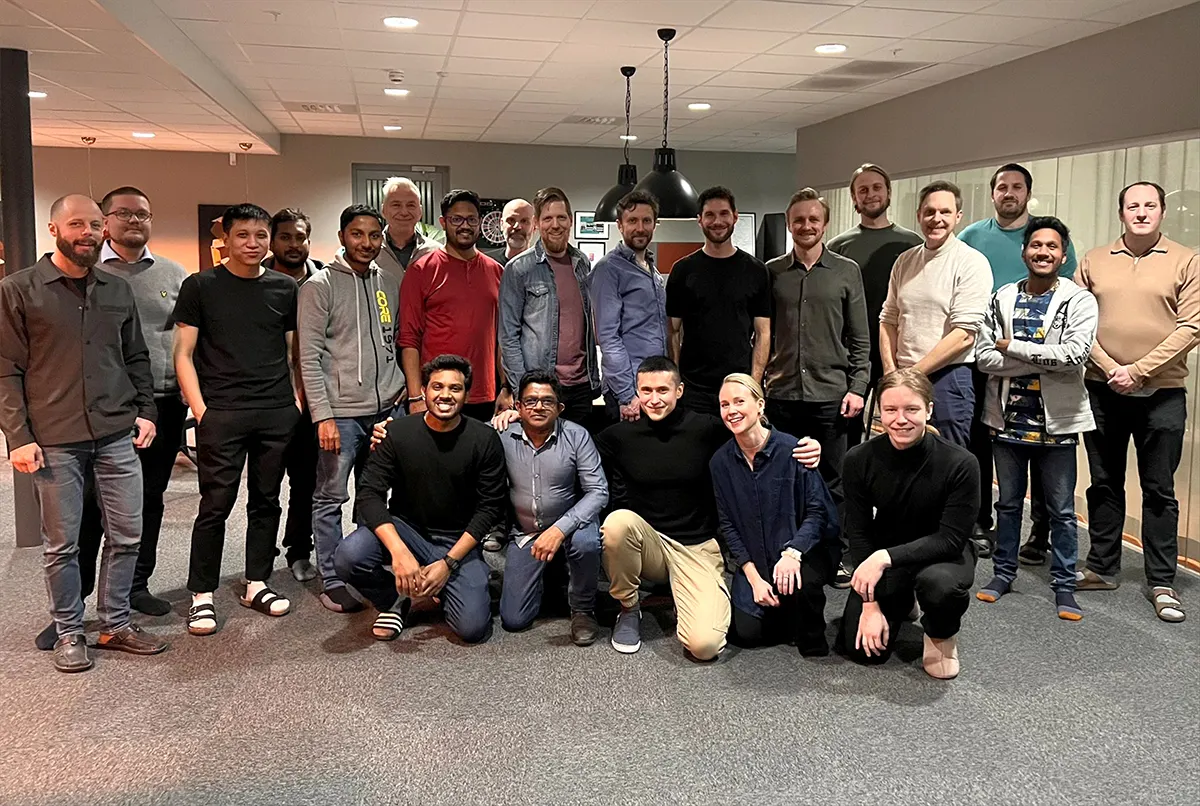
The companies that make it work do something fundamentally different. They treat the offshore team exactly the same as the team sitting in their Stockholm or Oslo office. Same Jira. Same standups. Same sprint reviews. Same direct access to the engineers, with no account manager sitting in the middle softening the feedback or translating the frustration into managed expectations.
The difference between a dedicated team and an outsourced project is the difference between a colleague and a contractor. One builds product knowledge, context, and judgment over time. The other starts from zero with every engagement.
Coming from a product marketing background in enterprise software, where the product itself was the infrastructure that engineering teams across global organisations depended on daily, I understood this instinctively. The companies that got value from complex enterprise software were the ones that invested in the relationship. The ones that treated it as a transaction got transactional results. Dedicated offshore teams work exactly the same way.
What This Looks Like When It Works
Consider Norway’s leading e-health provider, which serves 85% of Norwegian hospitals with electronic patient record and clinical decision systems. They run eight dedicated engineering teams building and maintaining the country’s third-generation hospital journal system using exactly this model. Not project-by-project outsourcing, but dedicated teams integrated directly into their engineering organisation, working on the same product over years.
A Swedish customer journey platform whose systems process over two billion interactions annually across 120 countries grew from a single developer on a proof of concept to nine specialists across iOS, Android, and QA using the same approach. The team did not just deliver code. They understood the product well enough to contribute to how it evolved.
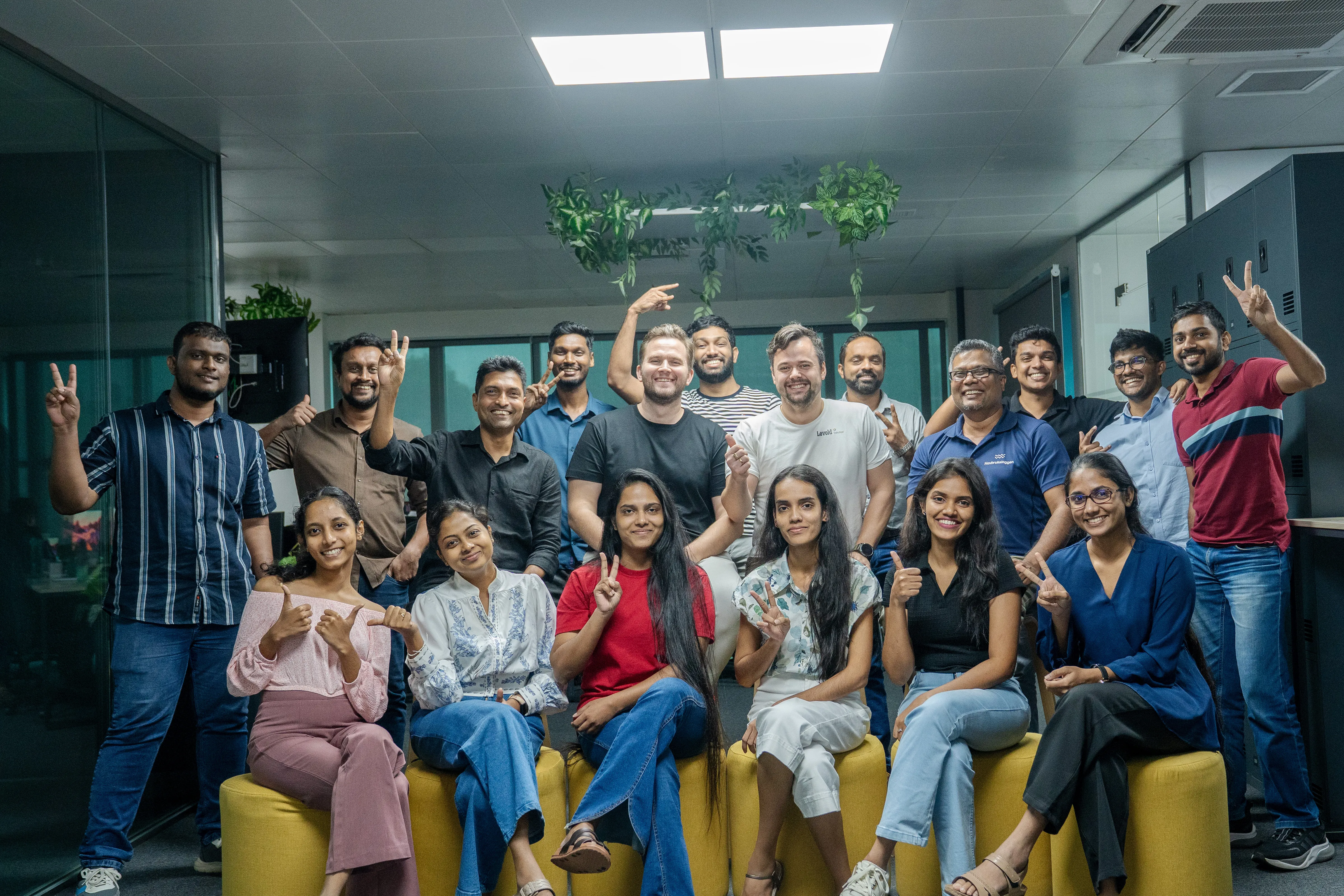
These are not companies that accept mediocrity or cut corners on quality. They have simply realised that the dedicated team model, done correctly, is not a compromise on their engineering standards. It is an extension of them.
What the AI Conversation Should Actually Be About
I want to come back to AI because I think the conversation happening in most boardrooms is the wrong one.
The question being asked is: will AI replace our engineers? The question that actually matters is: how do we build an engineering organisation that uses AI well? Those are very different questions with very different answers.
Building an AI-capable engineering team locally, in markets facing a projected shortfall of 18,000 tech professionals per year and salary expectations north of €6,000 per month, is going to be slower and more expensive than most product roadmaps can absorb. The engineers who have already shipped real AI features, not just experimented with them in a hackathon but actually built and deployed them into production products, are increasingly concentrated in markets where dedicated team partners operate.
According to McKinsey’s 2024 State of AI report, 72% of businesses globally now use at least one AI tool in their operations, which means AI capability is no longer concentrated in Western European markets. It has distributed globally, and the offshore engineering markets that European companies work with have been building and deploying these tools as fast as anyone else.
The smart move is to build a dedicated offshore team now, while this model is still undervalued in Scandinavian business culture, while the talent is available, and while AI tooling is at a point where offshore teams can be genuinely productive from early in the engagement. In two or three years this will be standard practice across the region. The question is whether you want to figure it out ahead of the curve or catch up later.
The Non-Negotiables for European Companies
I want to be clear about what cannot be compromised, because this is where the conversation gets important for companies operating in regulated European industries.
Your partner needs ISO/IEC 27001 certification, not as a checkbox but as evidence of an independently audited information security management system. For clients in healthcare, finance, or energy across the Nordic and DACH markets, this is a contractual baseline.
Everything else, including tech stack, team size, and timezone overlap, can be configured. Those three cannot be substituted. If you want to understand what this looks like in practice, our services page covers the full scope of what a mature dedicated team engagement involves.
The Bottom Line
I have spent the last several years working at the intersection of technology, marketing, and business development in the dedicated engineering teams space. Before that, a decade in tech watching how enterprise software gets built and scaled.
The pattern I keep seeing is consistent. The companies that treat dedicated offshore teams as a genuine extension of their engineering organisation, with the same investment in culture, communication, and continuity they would give a local hire, build something genuinely valuable. The companies that treat it as outsourcing get outsourcing results.
The developer shortage in Scandinavia is not going away. The AI wave is not replacing the engineers you need. It is making the good ones faster. And the stigma around offshoring belongs to a previous decade.
The dedicated team model, done well, is not a compromise. It is how ambitious companies scale at a pace the local market cannot support, without sacrificing quality, continuity, or the compliance posture that European enterprise clients require.
Sources (all 2024 to 2025)
TechSverige via Ework Group (February 2024): 18,000 annual tech shortfall in Sweden, 2024 to 2028
Computer Weekly (2024): Senior IT salaries in Sweden, 5,300 to 6,200 euros per month
Devico (2025): Offshore software development market at $178 billion in 2025, growing to $283 billion by 2031
Deloitte Global Outsourcing Survey (2024): 76% of IT leaders currently use offshore teams
MIT State of AI in Business (2025): AI is displacing BPO roles, not dedicated product engineering teams
McKinsey and Company, State of AI (2024): 72% of businesses globally use at least one AI tool; 20 to 30% productivity gains from AI in knowledge work
Baritech Solutions (2026): 40% reduction in miscommunication delays with AI-enhanced offshore teams
Kontorva (2025): Norway has 60,000 unfilled tech roles; 57% of Swedish recruiters search locally only
Qubit Labs (2025): Germany has 149,000 vacant IT positions